Head-to-Head: Unihertz Titan 2 vs Linksys Re7350 (Detailed Comparison)
The consumer electronics landscape is often defined by convergence, but occasionally, shoppers find themselves comparing devices that serve radically different corners of their digital ecosystem. In this detailed analysis, we explore an unconventional pairing that highlights the diversity of modern hardware: the Unihertz Titan 2 and the Linksys Re7350. While one is a ruggedized mobile communicator built for the tactile typist and the outdoor professional, the other is an essential piece of networking infrastructure designed to eliminate the frustrations of dead zones and signal drops. For laptop users in particular, understanding how these devices integrate into a mobile or home office setup is crucial for maintaining productivity in an increasingly remote world.
Laptop owners often prioritize the "ecosystem" effect. They care about how their secondary devices—be it a smartphone for tethering or a range extender for stable video conferencing—support the primary task of computing. The Unihertz Titan 2 represents the ultimate "companion" device for those who find modern glass-slab smartphones inadequate for heavy drafting or field work. Conversely, the Linksys Re7350 addresses the most common laptop-related grievance: the inability to maintain a high-speed Wi-Fi 6 connection in the far corners of a home or office. This comparison dives deep into the specifications, real-world utility, and long-term value of these two distinct technological solutions.
The Tactile Powerhouse: Unihertz Titan 2 Deep Dive
The Unihertz Titan 2 is not just a phone; it is a statement against the homogenization of mobile design. In an era where physical keyboards have been relegated to the history books, Unihertz has doubled down on the QWERTY experience. This device is the successor to a cult favorite, designed specifically for enthusiasts, journalists, and security professionals who require the precision of physical keys and the durability of a rugged chassis. When paired with a laptop, the Titan 2 acts as a robust secondary input device and a reliable communication hub that can withstand environments that would shatter a standard flagship phone.
Under the hood, the Titan 2 focuses on endurance and utility rather than raw benchmarking scores. It features a square display that deviates from the cinematic aspect ratios common today, specifically to accommodate the keyboard. This layout is surprisingly effective for reading long-form documents, managing spreadsheets, and responding to emails without the virtual keyboard obscuring half the screen. For the laptop user who often finds themselves working in cramped quarters—like an airplane tray table or a construction site—having a phone that can handle serious text entry independently is a significant productivity multiplier.
Durability is the other half of the Titan 2 story. It carries IP68 and MIL-STD-810G certifications, meaning it can survive drops, water immersion, and extreme temperatures. For those who use their laptops in the field, the Titan 2 is the perfect "hotspot" device. Its massive battery capacity ensures that even when tethering a laptop for hours on end, the phone remains operational long after the laptop's internal battery has given up. This reliability is what separates "gadgets" from "tools."
Pros and Cons of the Unihertz Titan 2
- Unrivaled Typing Experience: The physical QWERTY keyboard offers tactile feedback that improves typing speed and accuracy for long-form communications.
- Military-Grade Durability: Built to withstand drops, dust, and water, making it ideal for field workers and outdoor enthusiasts.
- Exceptional Battery Life: The large internal cell easily provides two days of heavy use, crucial for those who rely on mobile hotspots for their laptops.
- Dedicated Programmable Keys: Users can map specific functions or apps to physical buttons, streamlining workflows in high-pressure environments.
- Unique Form Factor: The square screen and wide body provide a distinct reading experience that feels more like a miniature tablet than a narrow phone.
- Niche Aspect Ratio: Some modern apps are not optimized for square displays, leading to UI clipping or odd scaling in gaming and video apps.
- Significant Weight: The rugged build and keyboard add bulk, making it much heavier and thicker than standard smartphones.
The Invisible Foundation: Linksys Re7350 Analysis
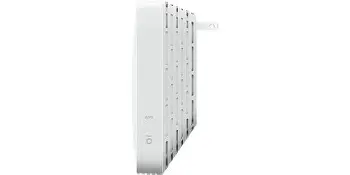
While the Titan 2 is a device you touch and feel constantly, the Linksys Re7350 is a device designed to be forgotten once it is plugged in. However, its impact on the laptop user experience is arguably more profound. As an AX1800 Dual-Band Wi-Fi 6 Range Extender, the Re7350 is the bridge between a frustrating "no bars" experience and a seamless, gigabit-speed workflow. For anyone who has tried to host a Zoom call from a bedroom located three walls away from the router, this device is a lifesaver.
The Re7350 utilizes Wi-Fi 6 (802.11ax) technology, which is specifically designed to handle high-density environments. Laptops manufactured in the last few years almost universally support Wi-Fi 6, which offers better efficiency and higher throughput than the older Wi-Fi 5 standard. The Re7350 ensures that this modern laptop hardware isn't throttled by a weak signal. By extending the range of an existing network by up to 2,000 square feet, it allows for a level of mobility that turns an entire house into a viable office space.
Looking for the best Laptops & Computers deals on Amazon?
Browse Now →One of the standout features of the Re7350 is its "Spot Finder" technology. Setting up a range extender can be a game of trial and error, but Linksys provides visual feedback to ensure the device is placed at the optimal distance from the router—far enough to extend the signal, but close enough to maintain a high-quality "backhaul" connection. Additionally, the inclusion of a Gigabit Ethernet port on the bottom of the device allows laptop users to create a "wired" connection in a room without pre-installed wall jacks, providing the lowest possible latency for gaming or large file transfers.
Pros and Cons of the Linksys Re7350
- Future-Proof Wi-Fi 6 Speeds: Supports speeds up to 1.8 Gbps, ensuring that modern laptops and tablets operate at their full potential.
- Seamless Roaming Capability: When paired with compatible Max-Stream routers, it creates a single network SSID so your laptop doesn't drop the connection when moving between rooms.
- Gigabit Ethernet Port: Allows for a stable, high-speed wired connection to a laptop or desktop in a remote room.
- Compact Plug-In Design: Does not require shelf space or messy cables; it sits flush against the wall outlet.
- Easy Setup: The push-button WPS setup and browser-based configuration make it accessible for non-technical users.
- Bandwidth Overhead: Like all extenders, it uses some bandwidth for the link back to the router, which can slightly reduce peak theoretical speeds compared to a dedicated mesh system.
- Single Outlet Occupancy: While compact, it can sometimes obstruct the second socket in a standard wall outlet depending on the plug orientation.
Head-to-Head Comparison Table
To better understand how these two devices compare in terms of their physical attributes and technical capabilities, the following table provides a side-by-side look at the key metrics that matter to the prosumer and business traveler.
| Feature | Unihertz Titan 2 | Linksys Re7350 |
|---|---|---|
| Primary Function | Rugged QWERTY Smartphone | Wi-Fi 6 Range Extender |
| Connectivity | 4G/5G LTE, Wi-Fi 5, Bluetooth, NFC | Wi-Fi 6 (AX1800), Dual-Band |
| Physical Interface | Full Physical QWERTY + Touchscreen | WPS Button, Gigabit Ethernet Port |
| Durability | IP68, MIL-STD-810G Ruggedized | Standard Indoor Plastic Housing |
| Portability | Handheld (Pocketable but bulky) | Wall-plug (Stationary) |
| Best Laptop Use Case | Mobile Hotspot & Tactile Comms | Home Office Signal Optimization |
| Power Source | Internal Rechargeable Battery | AC Wall Outlet |
Performance in the Real World: Use Case Scenarios
To truly appreciate these devices, one must look at how they solve real-world problems for laptop users. Imagine a field engineer working on a remote pipeline. Their laptop contains the CAD drawings and telemetry data, but they are outdoors in the wind and rain. The Unihertz Titan 2 becomes the indispensable partner here. They can tether their laptop to the Titan 2's cellular connection, knowing the phone won't die halfway through the day. If they need to type out a quick status report while wearing gloves or in moving vehicle, the physical keys of the Titan 2 provide a level of speed that a touchscreen simply cannot match. It is the bridge between the digital office and the harsh physical world.

On the other end of the spectrum, consider a freelance graphic designer working from a Victorian-era home with thick plaster walls. Their router is in the living room, but their studio is in the attic. The signal reaching their laptop is intermittent, causing lag when uploading large assets to the cloud. By placing the Linksys Re7350 in the hallway between the living room and the attic, they transform their workspace. The Wi-Fi 6 support ensures that even when other family members are streaming 4K video downstairs, the designer’s laptop maintains a prioritized, high-speed connection. It changes the laptop from a tethered workstation into a truly mobile creative tool within the home.
Furthermore, the business traveler might find use for both. The Titan 2 serves as the reliable "road warrior" phone that survives the rigors of airport security and rental car drops. Meanwhile, if they find themselves in a hotel room with poor Wi-Fi coverage but an active Ethernet jack at the desk, the Linksys Re7350 can be used in "Access Point" mode to create a private, high-speed Wi-Fi 6 bubble for their laptop and other devices. These scenarios underscore that while the products belong to different categories, they both solve the fundamental problem of connectivity and input efficiency.
Buying Guide: Which One Fits Your Workflow?
Deciding between investing in a high-end mobile device like the Titan 2 or an infrastructure upgrade like the Re7350 depends on where your "bottleneck" exists. If you find that your work is hampered by environmental factors or a lack of precision, the smartphone is the answer. If your work is hampered by the limitations of your physical space and networking, the extender is the priority.
Find top-rated Laptops & Computers products at great prices.
Shop Amazon →Who Should Buy the Unihertz Titan 2?
The Titan 2 is designed for the person who feels "fat-fingered" on glass screens. If you spend your day in Slack, Microsoft Teams, or email, the ability to type without looking at the keyboard is a massive advantage. It is also the premier choice for anyone in the trades—construction, logistics, or emergency services—where a phone is likely to be dropped or exposed to the elements. For laptop users, it is arguably the best mobile hotspot device on the market due to its ruggedness and battery life. It is for those who want their phone to be a workhorse, not a fashion accessory.
Who Should Buy the Linksys Re7350?
The Re7350 is for the person whose laptop is currently limited by the architecture of their home. If you experience "buffering" during video calls, or if your download speeds on your laptop are significantly slower in your office than they are next to the router, this is a mandatory upgrade. It is particularly valuable for those who have recently upgraded to a Wi-Fi 6 capable laptop (like a modern MacBook Pro or Dell XPS) but are still using an older router. This extender brings the benefits of the AX standard to the rooms where you actually do your work. It is an investment in frustration-reduction.
Key Considerations for Both
When selecting either device, consider the interoperability. The Titan 2 runs Android, meaning it integrates perfectly with Google Workspace and Microsoft 365, syncing seamlessly with your laptop. The Re7350 is brand-agnostic but performs exceptionally well with Linksys Max-Stream hardware. Before purchasing the Re7350, check if your house is better suited for a mesh system; however, for single-room extensions or targeted "dead-zone" killing, the Re7350 is often the more cost-effective and simpler solution.
Infrastructure vs. Interface: A Conclusion
The comparison between the Unihertz Titan 2 and the Linksys Re7350 highlights two different ways to improve the laptop user's life. The Titan 2 focuses on the interface—how we input data and stay connected while on the move. It addresses the physical limitations of the user and the environment. The Re7350 focuses on the infrastructure—the invisible waves that carry our work from the laptop to the world. It addresses the architectural and technological limitations of the workspace.
For the modern professional, these are not necessarily "either/or" choices, but rather different pillars of a complete mobile office strategy. A laptop is only as good as the tools surrounding it. Having a rugged, QWERTY-equipped phone like the Titan 2 ensures that you can always communicate, no matter where you are. Having a Wi-Fi 6 extender like the Re7350 ensures that your laptop is never held back by a weak signal. Ultimately, the Titan 2 wins on personality and specialized utility, while the Re7350 wins on essential, everyday necessity for the home-based worker. By choosing the device that solves your most frequent "pain point," you can significantly enhance your productivity and reduce the daily friction of the digital age.