Should You Upgrade from Rokid Ai Glasses Style to Peladn Ho5 370 Mini Pc?
The landscape of portable computing is undergoing a radical shift. For several years, the conversation dominated the space between traditional clamshell laptops and ultra-mobile tablets. However, a new niche has emerged that challenges our very definition of a "workstation." On one side, we have the rise of Augmented Reality (AR) spectacles like the Rokid Ai Glasses Style, which aim to replace the physical monitor entirely. On the other, we have the resurgence of the ultra-compact powerhouse, exemplified by the Peladn Ho5 370 Mini PC. While these two devices represent different philosophies—one focusing on the display interface and the other on localized processing power—they are increasingly being compared by tech enthusiasts looking for the ultimate minimalist setup.
The question of "upgrading" from a wearable display solution like the Rokid Ai Glasses to a dedicated compact hub like the Peladn Ho5 370 is not about moving from an older version of a product to a newer one. Instead, it is about a logistical shift in how one handles data, heat, and multitasking. As users find the limitations of tethering glasses to smartphones or low-powered handhelds, the allure of a dedicated, high-performance mini PC becomes undeniable. This article explores whether making the jump to a stationary but portable mini PC like the Peladn Ho5 370 is the right move for your digital lifestyle.
The Evolution of Portable Productivity
To understand why one might transition from the Rokid Ai Glasses Style to a Peladn Mini PC, we must look at the constraints of the wearable era. The Rokid Ai Glasses Style was designed to be a lightweight, stylish bridge into the world of AR. By projecting a massive virtual screen in front of the user's eyes, it solved the problem of "small screen fatigue" associated with mobile phones. However, the glasses are ultimately a peripheral. They rely on another device—usually a smartphone or a basic compute pack—to provide the logic, the operating system, and the power.
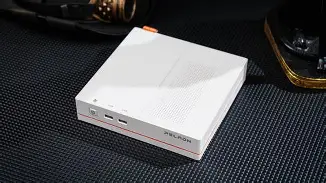
In contrast, the Peladn Ho5 370 Mini PC represents a return to "heavy lifting." It is a self-contained unit that houses a full desktop-class environment in a chassis small enough to fit in a jacket pocket or a small backpack. The shift from the Rokid style to the Peladn style is often driven by a need for "True Desktop Performance." Many users who start with AR glasses find that while the visual immersion is excellent, the actual computing experience—typing, file management, and running professional software—remains hampered by the mobile OS they are tethered to. Upgrading to the Peladn Ho5 370 replaces that mobile bottleneck with a robust, Windows-driven architecture.
Detailed Analysis: Peladn Ho5 370 Mini PC
The Peladn Ho5 370 is a fascinating piece of hardware because it targets the "sweet spot" of the mini PC market. It isn’t just a low-power office box; it is built to handle modern multitasking. Powered by an AMD Ryzen architecture, specifically the 3750H or similar variants depending on the regional SKU (often marketed as the 370 series in specific mobile-workstation circles), it offers a significant leap in multi-threaded performance compared to the mobile chips typically driving AR glasses.
One of the primary reasons users consider this hardware is its cooling and stability. When using AR glasses tethered to a phone for three hours of work, the phone inevitably throttles due to heat. The Peladn Ho5 370 features active cooling—a dedicated fan and heat sink system that allows the processor to maintain high clock speeds for extended periods. This is a game-changer for users who are editing 4K video, managing large Excel databases, or even engaging in light competitive gaming. The inclusion of high-speed DDR4 RAM (expandable in many cases) and NVMe SSD storage ensures that the "wait time" between clicking an icon and the app opening is virtually eliminated.
Furthermore, the connectivity suite on the Peladn Ho5 370 is a significant upgrade over any wearable-tethered setup. With multiple USB 3.0 ports, HDMI outputs, and often a Type-C port that supports DisplayPort Alt Mode, it allows you to build a bridge. Interestingly, the best way to use the Peladn Ho5 370 might actually be with the Rokid glasses, rather than instead of them. However, if you are moving away from a "glasses-only" mobile lifestyle, the Peladn provides the physical ports needed for mechanical keyboards, high-precision mice, and external RAID storage that a phone-based AR setup simply cannot accommodate.
The Rokid Ai Glasses Style: A Different Value Proposition
It is important to recognize what you might be leaving behind if you move away from the Rokid Ai Glasses Style. The Rokid glasses are about spatial freedom. You can use them on a plane, in a coffee shop, or lying in bed. They provide a private cinema experience and a level of immersion that a physical monitor attached to a Mini PC cannot replicate. The "Style" version focused heavily on aesthetics, ensuring the glasses didn't look overly "cyborg-like," making them socially acceptable in public spaces.
However, the "Ai" aspect of the Rokid Glasses often feels like a promise of the future rather than a utility of the present. While they can perform basic voice commands and display notifications, they lack the raw computational "grunt" to do serious development work or heavy creative production. Most "upgraders" find that the Rokid glasses are a brilliant output device, but a poor creation device. By moving to the Peladn Ho5 370, you are sacrificing that ultra-portability for a professional-grade workflow.
Looking for the best Laptops & Computers deals on Amazon?
Browse Now →Comparing the Experiences
When we look at these two devices, we are comparing a "Display-First" experience with a "Compute-First" experience. A user on the Rokid glasses cares about how big the screen looks and how light it feels on their nose. A user on the Peladn Ho5 370 cares about how many Chrome tabs they can open and whether the system will crash during a Zoom call while sharing a screen.
| Feature | Rokid Ai Glasses Style | Peladn Ho5 370 Mini PC |
|---|---|---|
| Primary Function | Wearable AR Display / Basic Compute | Desktop-Grade Mini Workstation |
| Processing Power | Low (Mobile/Tether Dependent) | High (AMD Ryzen 3000-series Mobile/Desktop Hybrid) |
| Storage | Non-existent / Cloud Dependent | High-speed NVMe SSD (Internal) |
| Multitasking | Limited (Sequential Apps) | Advanced (Native Windows/Linux Multitasking) |
| Connectivity | USB-C Only | HDMI, USB-A, USB-C, Ethernet, Audio Jack |
| Thermal Management | Passive (Can get warm on temples) | Active (Fan-cooled for sustained load) |
| Portability | Ultra-portable (Glasses case) | Highly Portable (Small box + peripherals) |
Pros and Cons of the Peladn Ho5 370 Mini PC
The Peladn Ho5 370 is designed for the user who is tired of the compromises of ultra-low-power computing. If you have been trying to make a "wearable office" work and found it lacking in speed, this Mini PC is the logical next step. Here are the specific benefits and drawbacks:
- Pro: Sustained Performance. Unlike a smartphone or a wearable compute pack, the Ho5 370 has the thermal headroom to run at 100% CPU usage without slowing down.
- Pro: Port Versatility. You can connect a dual-monitor setup, a full-sized keyboard, and a wired internet connection for latency-free work and gaming.
- Pro: Software Compatibility. It runs full versions of Adobe Creative Cloud, Microsoft Office, and specialized CAD software that mobile apps cannot replicate.
- Pro: Upgradeability. In many units, you can easily pop the top to add more RAM or swap out the SSD, extending the life of the machine.
- Con: Requirement for Peripherals. Unlike the Rokid Glasses, which are "all-in-one" displays, the Peladn requires you to bring a monitor, keyboard, and mouse to the table.
- Con: Power Dependency. You generally cannot run this off a standard phone battery; it requires a dedicated DC power brick or a high-wattage PD power bank.
Pros and Cons of the Rokid Ai Glasses Style
If you are considering not upgrading, or if you are wondering what you might miss, the Rokid Ai Glasses Style still holds several unique advantages in the modern tech ecosystem:
- Pro: Infinite Screen Real Estate. The virtual 120-inch screen experience is something a physical monitor at a desk simply cannot match in terms of scale.
- Pro: Extreme Privacy. No one can see what you are working on, making these ideal for sensitive work in public transportation or open offices.
- Pro: Weightless Computing. When paired with the right software, you can work in ergonomic positions (like reclining) that are impossible with a traditional PC.
- Con: Eye Strain. Prolonged use of AR glasses can lead to ocular fatigue, whereas looking at a traditional monitor is often more comfortable for 8-hour shifts.
- Con: Battery Drain. If tethered to a phone, the glasses will kill the host device's battery in a matter of hours.
- Con: Interaction Friction. Using a phone screen as a touchpad for AR glasses is significantly less efficient than using a physical mouse.
Real-World Use Cases: Why Make the Switch?
Consider the "Digital Nomad" scenario. Many started their journey with the Rokid Ai Glasses Style thinking they could work entirely from their phone and the glasses. After a month, reality sets in: editing a complex spreadsheet or coding in a browser-based IDE using a virtual glass screen is tedious. The "upgrade" to the Peladn Ho5 370 Mini PC happens when the user realizes they need a "Home Base."
With the Peladn Ho5 370, that same traveler can keep their setup remarkably small, but when they arrive at a co-working space or an Airbnb, they plug the Mini PC into the TV or a small portable monitor and suddenly have a workstation that rivals a $1,500 laptop. It allows for a "Split Persona" workflow: use the Rokid glasses for entertainment, watching movies, or checking quick stats, but use the Peladn for the 4 to 6 hours of deep work required to sustain a career.
Another use case is the "Home Office Optimizer." If you have limited desk space, a Peladn Ho5 370 can be VESA-mounted to the back of a monitor, effectively creating an All-In-One PC that is far more powerful than the compute hardware inside the Rokid glasses or a mid-range tablet. It provides the stability of a desktop with the footprint of a sandwich.
Buying Guide: Is the Peladn Ho5 370 Right for You?
Before you commit to upgrading, you should evaluate your specific technical requirements. Not all Mini PCs are created equal, and the Ho5 370 occupies a specific niche. Use the following guide to determine if this is the right hardware for your desk:
Identify Your Current Bottleneck
If your main frustration with the Rokid Ai Glasses Style is that "it's too laggy" or "I can't run my favorite Windows app," then the Peladn Ho5 370 is a perfect upgrade. It solves the logic and OS problem. However, if your frustration is that "the screen is too small," buying a Mini PC won't help unless you also buy a large monitor.
Looking for the best Laptops & Computers deals on Amazon?
Browse Now →Check Your Peripheral Inventory
Moving to a Mini PC means you need a ecosystem. To get the most out of the Peladn, you should invest in a high-quality 60% mechanical keyboard and a portable 15.6-inch monitor. This "modular" laptop replacement is what makes the Mini PC worth it. If you aren't willing to carry these items, you might be better sticking with the glasses or buying a traditional laptop.
Consider the "Hybrid" Approach
One of the most powerful setups is actually connecting the Rokid Ai Glasses Style directly to the Peladn Ho5 370. Since the Peladn has a Type-C port that supports video out, you can use the Mini PC as your "brain" and the Rokid glasses as your "monitor." This gives you the best of both worlds: desktop horsepower with an AR display. If this is your plan, ensure the specific SKU of the Peladn you are buying supports "Alt-Mode Video" over USB-C.
Storage and Memory Requirements
The Peladn Ho5 370 usually comes in various configurations. For a smooth Windows 11 experience, do not settle for anything less than 16GB of RAM. Because the integrated Radeon graphics share memory with the system, 8GB can become a bottleneck very quickly during multitasking.

The Verdict: Should You Upgrade?
The decision to upgrade from the Rokid Ai Glasses Style to the Peladn Ho5 370 Mini PC depends entirely on whether you are shifting from "Consumption" to "Production." The Rokid glasses are a triumph of engineering for media consumption, light browsing, and the "cool factor" of augmented reality. They are a visionary product that changes how we see the world. However, as as a primary computer, they are still in their infancy.
The Peladn Ho5 370 Mini PC is a mature, practical solution for the here and now. It offers the reliability of the x86 architecture, the speed of a dedicated desktop processor, and the flexibility of a traditional operating system. It is an "upgrade" in terms of capability, reliability, and professional throughput. If you find yourself constantly reaching for a "real" computer because your wearable setup feels like a toy, then the Peladn Ho5 370 is the robust, compact powerhouse you’ve been looking for. It takes the portability you loved about the glasses and adds the professional integrity required for serious computing.
Ultimately, these two devices represent the two paths of future computing. One path leads to the head-mounted display, and the other leads to the invisible, modular computer. For those who need to get things done today, the modular path offered by Peladn is currently the more efficient and powerful choice.